Why this is not a DIY repair
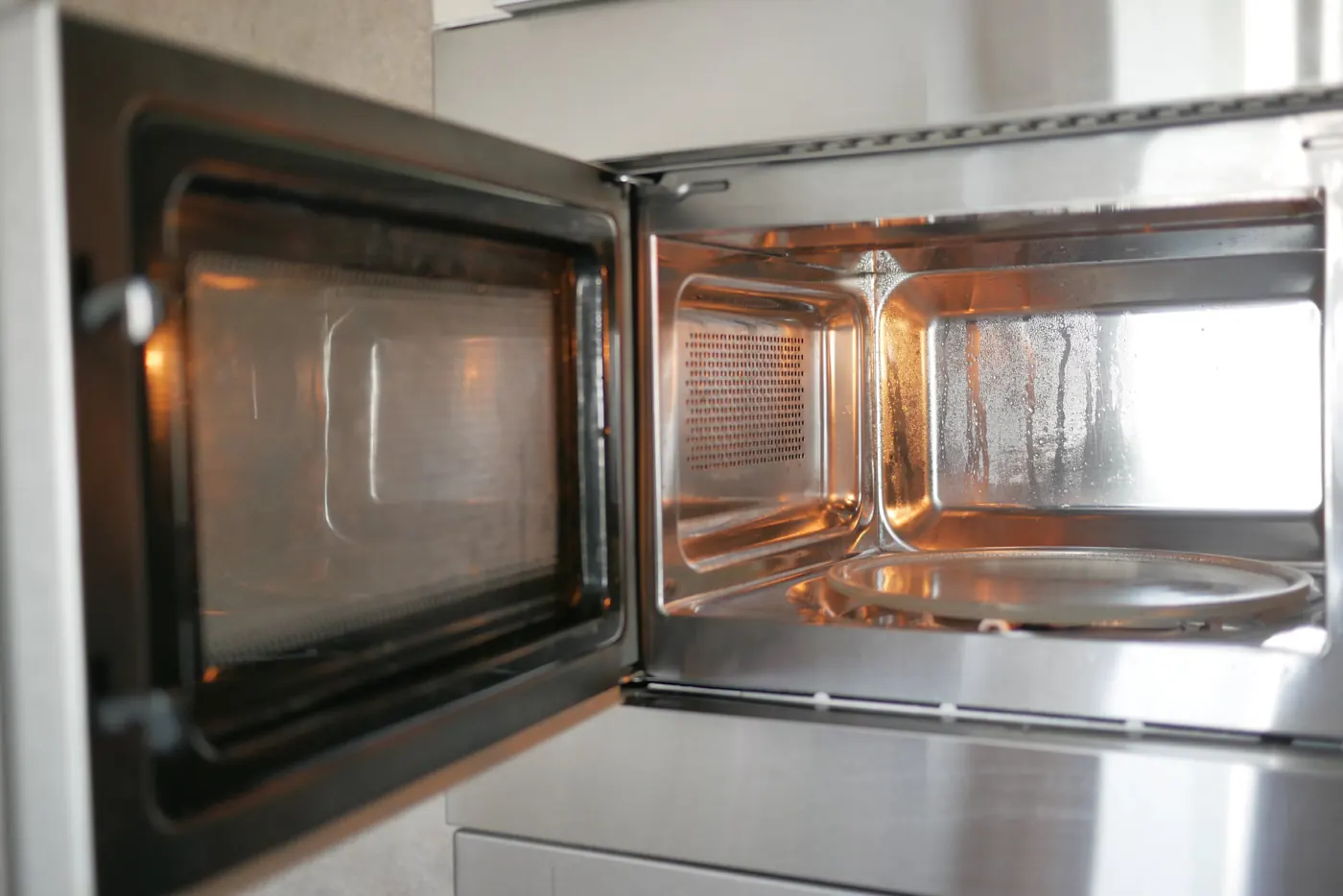
A microwave's high-voltage capacitor can store a dangerous charge even after the microwave is unplugged. Never open the outer cover yourself. Repairs inside the cabinet should only be done by a trained technician.
Simple checks that are safe
- Test with a cup of water. Heat a mug of water for one minute on full power. If it barely warms, the microwave isn't heating.
- Check the power level. Make sure it isn't set to defrost or a low power level.
- Check the door closes firmly. A worn latch can stop heating on some models.
- Try another socket. Avoid extension leads; microwaves draw a lot of power.
What usually fails
| Part | What it does | Sign of failure |
|---|---|---|
| Magnetron | Produces the microwaves | No heat, sometimes a loud buzz or burning smell |
| High-voltage diode | Works with the capacitor to power the magnetron | No heat, sometimes buzzing |
| High-voltage capacitor | Stores energy for the magnetron | No heat, fuse may blow |
| Door interlock switches | Stop the microwave running with the door open | Dead microwave or no heat |
| Thermal cut-out | Protects the magnetron from overheating | Stops heating after a short time |
Repair or replace?
For built-in, convection and combination microwaves, repair is usually far cheaper than replacement. For a basic countertop solo microwave, a new magnetron can cost close to the price of a new unit. Our technician tells you honestly after the AED 75 inspection, so you can choose. Every part we install has a 1-year warranty, and every repaired microwave is tested for safe operation. See our microwave repair page.