Gas safety first
If you smell gas: turn off the cooker knobs and the gas supply valve, open windows and doors, don't use switches, phones or flames near the cooker, and leave the area. Contact your gas supplier or emergency services. Only call for an appliance repair once the area is safe.
Checks you can do
- Let the burner cool and switch off the cooker's electric supply if it has one.
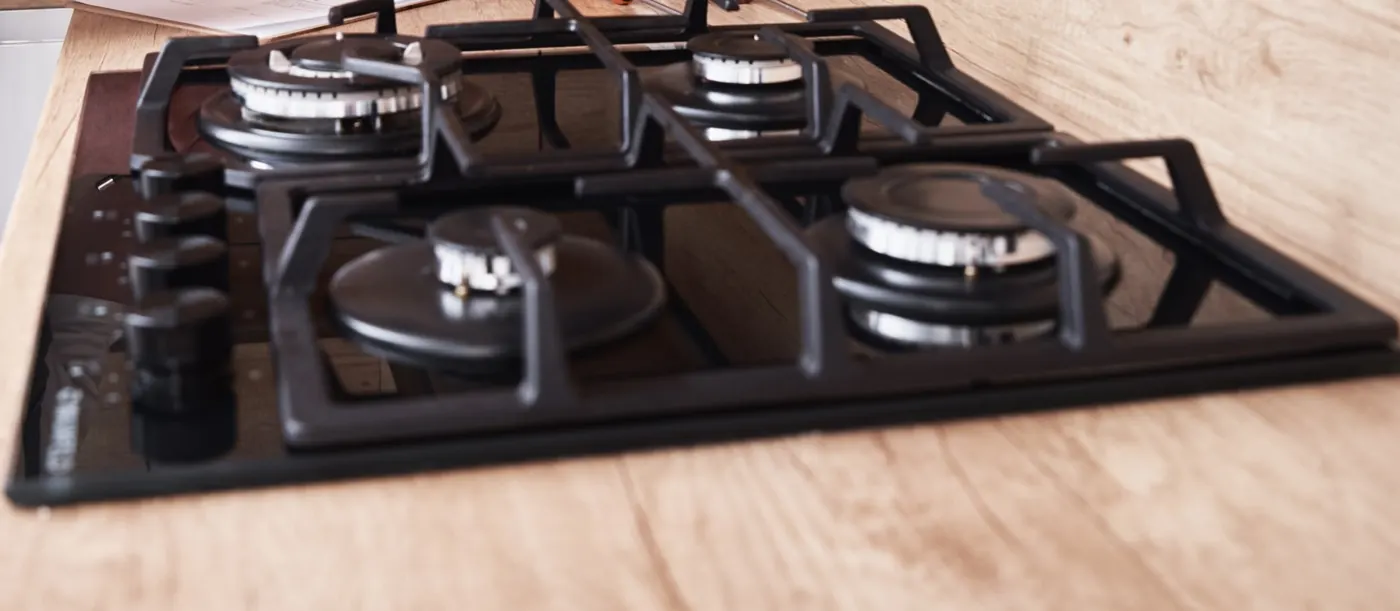
- Check the burner cap is seated correctly. A cap that sits crooked after cleaning stops the flame spreading evenly.
- Dry the burner. Spilled water, tea or milk around the electrode is the most common cause of clicking without flame. Let it dry fully.
- Clean the burner holes with a soft brush or a pin. Don't enlarge the holes.
- Clean the white ceramic electrode with a dry cloth. Look for cracks.
- Try again. Hold the knob in for 5 to 10 seconds after lighting so the safety device warms up.
Common causes and repairs
| Symptom | Likely cause | Repair |
|---|---|---|
| Clicks, no flame | Wet or dirty electrode, blocked burner holes | Clean and dry |
| Clicks, no flame on one burner only | Cracked electrode or loose wire | Replace electrode |
| No clicking at all | Ignition switch or spark generator | Replace part |
| Lights but goes out when knob released | Thermocouple or flame failure device | Replace thermocouple |
| Weak or yellow flame | Blocked jet or low gas pressure | Clean jet, check supply |
| Constant clicking after lighting | Wet ignition switch or faulty switch | Dry or replace switch |
Professional cooker repair
FixQara technicians repair freestanding gas cookers, built-in hobs and gas ovens from all major brands, including Ariston, Bosch, Siemens and others. Every gas repair finishes with a leak check. The inspection is AED 75, and every part we install carries a 1-year warranty. See our cooking range repair page.